
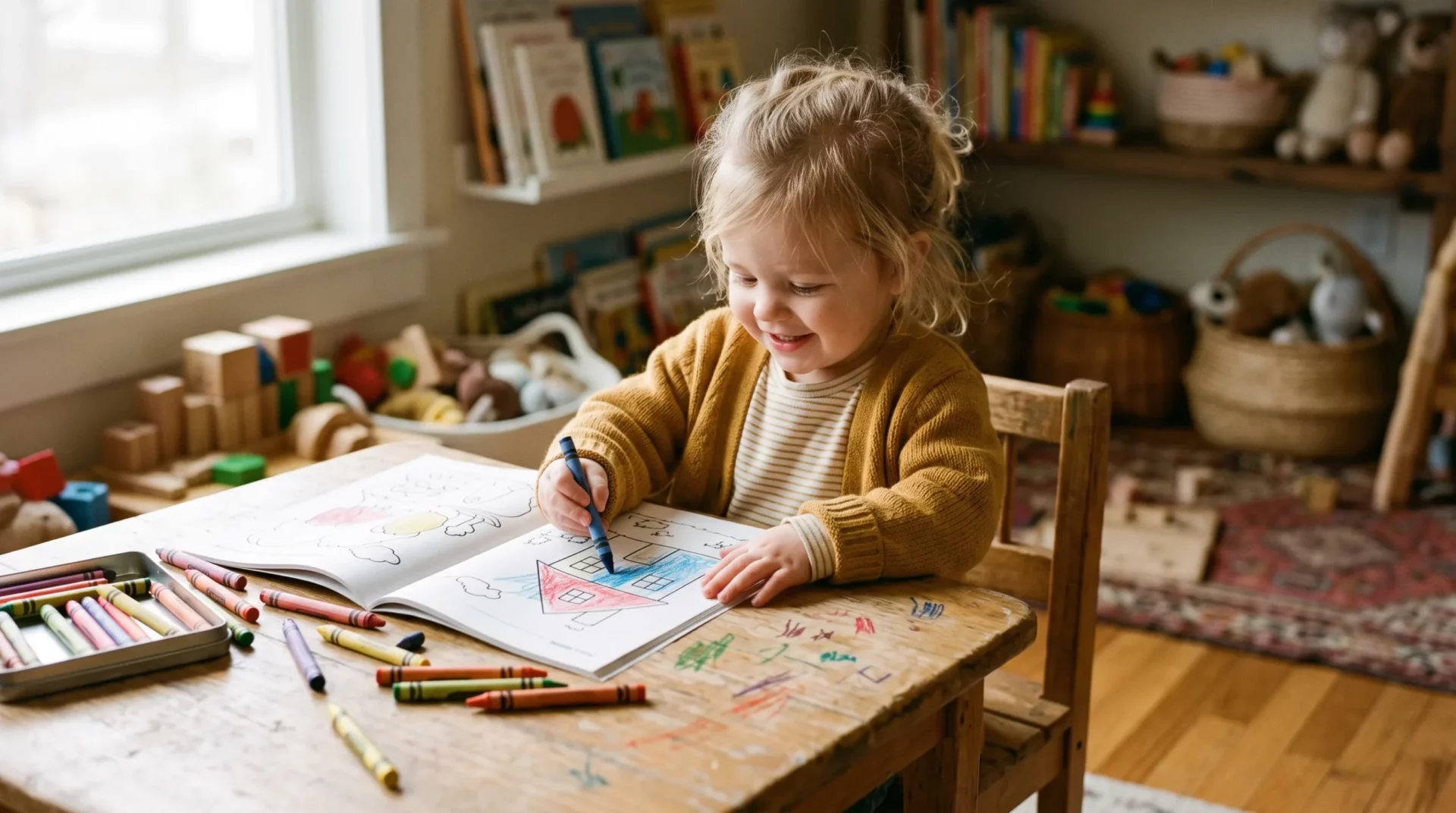
Colouring books are one of the simplest, most affordable activities you can hand your toddler, and the benefits of colouring books for toddlers go well beyond keeping little hands busy. From building finger strength to helping them settle down after a big day, a few crayons and a page of pictures do more than most parents realise.
You don’t need a fancy setup or a huge stack of supplies. A few crayons, a simple book, and a bit of time together is enough to get started.
Key Takeaways
Here’s a quick look at what the research shows and what this post covers, so you can jump to whatever’s most useful to you.
- Colouring builds hand strength and hand-eye coordination, laying groundwork for future writing
- It helps toddlers extend their focus and practice patience
- The repetitive motion has a genuine calming effect during busy or overstimulated days
- Colouring supports early learning like colour, shape, and number recognition
- Most toddlers are ready to start around 18 months to 2 years, with big scribbles before anything more structured
- Colouring together, not just handing over a book, adds a bonding element on top of the developmental benefits
Fine Motor Skills and Hand-Eye Coordination

Building Finger and Hand Strength
Gripping a crayon and pressing it to paper works the small muscles in a toddler’s fingers and hands, muscles that don’t get much of a workout anywhere else at this age. This is sometimes called “writing prep,” since the same grip and control a toddler builds while scribbling becomes the foundation for holding a pencil properly a few years down the track.
Training Visual-Motor Coordination
Watching their hand move while trying to keep colour on the page (or at least in the general area) trains a toddler’s eyes and hands to work together. It’s clumsy at first, and that’s expected; the skill develops with repetition rather than instruction.
Focus, Patience, and Emotional Regulation
Extending Attention Span
Sitting with one picture for even a couple of minutes is a real stretch for a toddler. Colouring gives them a low-pressure way to practice staying with a single task, which slowly builds the kind of attention span they’ll need later for things like sitting through a story or following simple instructions.
A Calming, Mindful Break During Busy Days
The repetitive motion of colouring, back and forth, around and around, has a genuinely soothing effect. It’s one of the easiest screen-free ways to help an overstimulated toddler settle down, whether that’s after a big outing, before nap time, or just in the middle of an otherwise chaotic afternoon.
Early Learning and Creativity
Colour and Shape Recognition
The colouring pages naturally introduce early concepts like colours, shapes, numbers, and animals. Naming the colour they’re reaching for, or pointing out the shape they just colouring, turns a simple activity into a bit of early learning without it feeling like a lesson.
Encouraging Imagination Through Open-Ended Colouring
There’s no wrong way for a toddler to colour, and that’s part of the point. Letting them choose colours freely, even if the sky ends up purple and the grass ends up orange, supports creative thinking and gives them a sense of control over something that’s entirely theirs.
When to Start and How to Choose the Right Colouring Books
Best Age to Introduce Colouring
Most toddlers are ready to start around 18 months to 2 years old, usually with big, chunky crayons and simple scribbling rather than anything structured. There’s no need to wait for “proper” colouring inside the lines, that skill comes much later, closer to preschool age.
What to Look For in a Toddler-Friendly Colouring Book
Look for large, simple images with thick outlines rather than detailed pictures, since fine details are frustrating for small hands and don’t add much at this age. Thicker board-style or sturdy paperback pages also hold up better against enthusiastic scribbling (and the occasional page tear). A book like The Creative Toddler’s First Colouring Book Ages 1-3 fits this well; it’s designed specifically around large, simple images for the 1 to 3 age range.
Colouring Together as a Bonding Activity
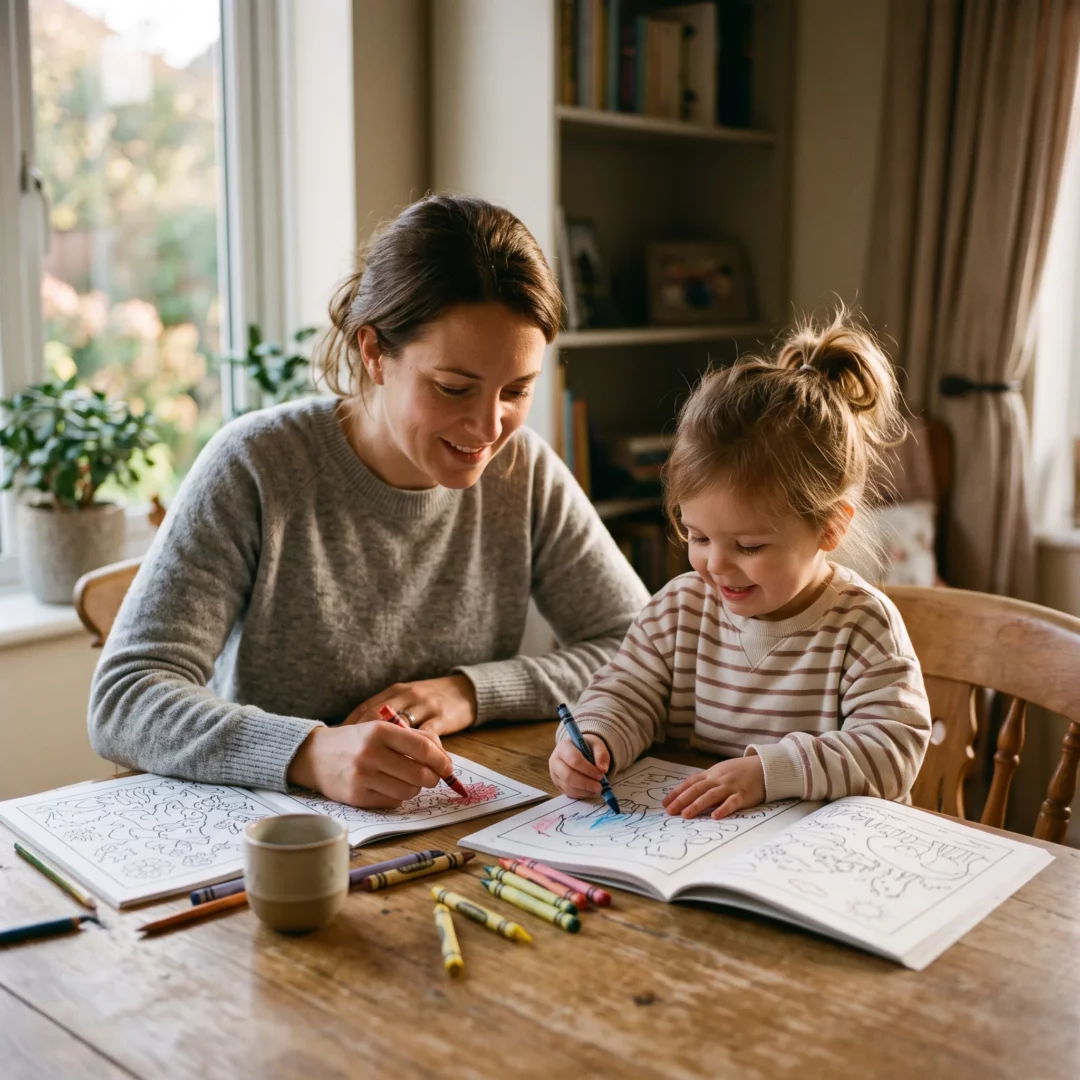
Colouring doesn’t have to be something a toddler does alone at the table while you get on with something else. Sitting down together, even for five minutes, turns it into shared time rather than just an activity to fill a gap. Ask them what they’re colouring, hand them a new colour, or colour your own page alongside them. It’s a small thing, but it adds a connection element on top of everything else colouring already does developmentally.
Practical Tips for Colouring Time
Setting Up a Simple, Low-Mess Colouring Space
A small table or a clear spot on the floor with a mat underneath is really all you need. Keep crayons in a container your toddler can reach and put back themselves, since that small bit of independence goes a long way.
Letting Your Toddler Lead, Without Pressure to “Stay in the Lines”
Try not to correct or redirect too much. The goal at this age isn’t a tidy picture; it’s the process, the grip, the colour choices, the concentration of the characters in the colouring book.
The support you give them along with learning the words given. Such as the name of the colour and you can get them to learn how to recognise that actual colour and even gradually learn how to spell the word.
This support gives your toddler a calm, focused activity to enjoy with you while building their cognitive skills.
Final Takeaway: The Benefits of Colouring Books for Toddlers
A few crayons and a simple book do more than keep a toddler occupied. Colouring builds hand strength and coordination, stretches attention span, offers a genuine calming outlet, and supports early learning, all while giving you a few minutes of shared, quiet time together. It’s a small, low-cost habit with a surprising amount packed into it.
Grab a colouring book and a handful of crayons and give it a try today; even five minutes makes a difference. If you’re looking for another simple activity to build into your routine, such as The benefits of reading to your child can help boost the many activities for your child along the way.
If you’re looking for a place to start, here are two well-reviewed picks worth checking out:
For a well-reviewed pick to get started, My First Toddler Colouring Book: Fun with Numbers, Letters, Shapes, Colours, and Animals! is a popular option that covers a wide range of early concepts in one book.
Frequently Asked Questions
What are the benefits of colouring books for toddlers?
Colouring builds fine motor skills and hand-eye coordination, extends attention span, offers a calming outlet, and supports early learning like colour and shape recognition.
At what age should a toddler start colouring?
Most toddlers are ready around 18 months to 2 years old, usually starting with big scribbles rather than anything structured.
How do colouring books help with fine motor skills?
Gripping a crayon and pressing it to paper strengthens the small muscles in a toddler’s fingers and hands, which lays the groundwork for holding a pencil later on.
What do toddlers learn from colouring?
Beyond motor skills, toddlers pick up early colour and shape recognition, practice focus and patience, and get a low-pressure outlet for creativity and self-expression.
How can I encourage my toddler to colour?
Keep sessions short and pressure-free, sit down and colour alongside them, and let them choose their own colours without correcting how they use them.
Join the Conversation
Does your toddler have a favourite thing to colour, or a colouring routine that works well in your house? Share it in the comments; other parents might find it useful too.