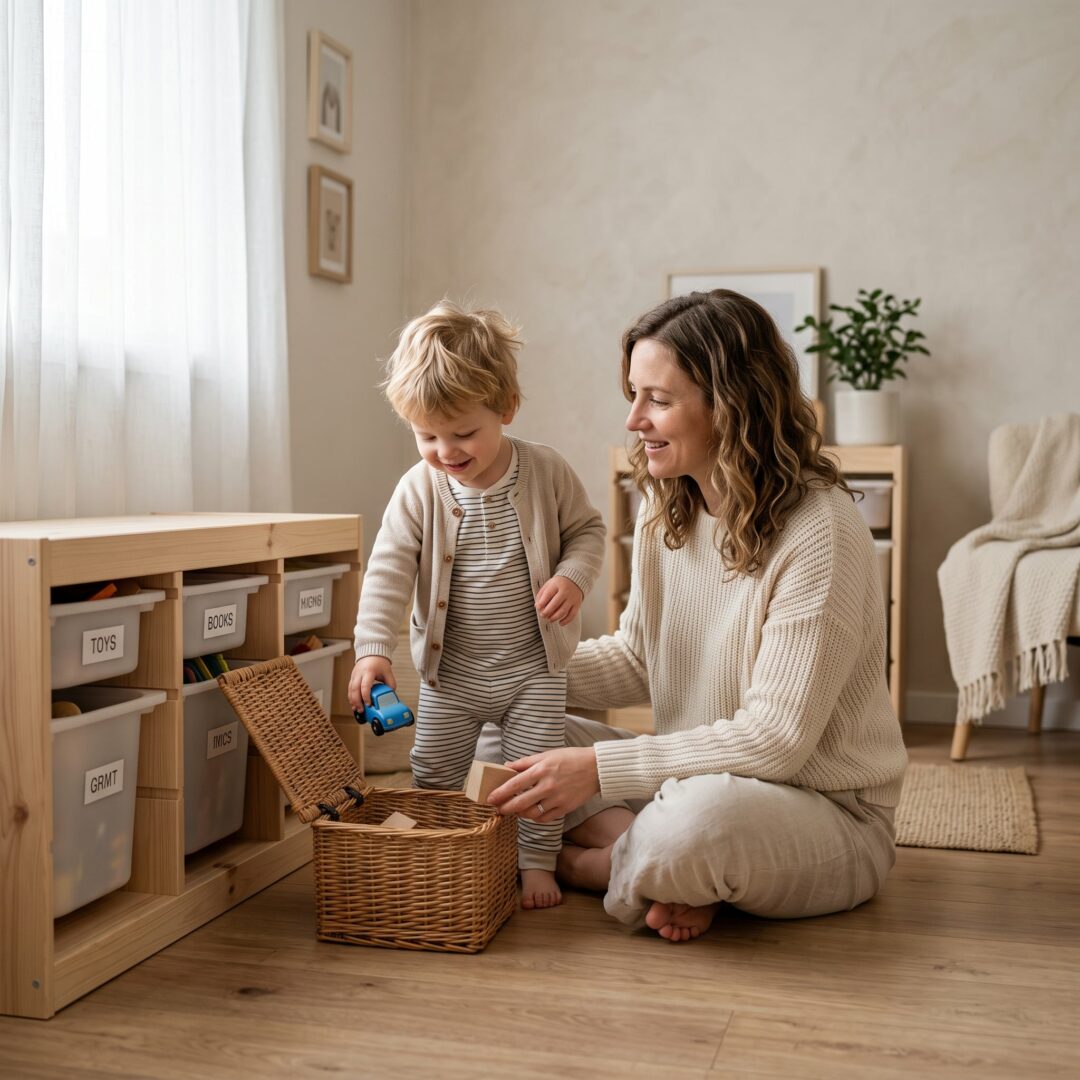
Parenting doesn’t need to feel chaotic. A few simple parenting strategies like predictable routines, clear choices, and positive communication can dramatically reduce stress and make daily life run more smoothly. These small habits help kids feel secure, confident, and ready for the day.
Key Takeaways
Daily life becomes easier when you use simple, consistent parenting habits that reduce stress and help kids feel secure.
Predictable routines: Same order each day, visual charts, written lists
Clear choices: Two options only, reduces power struggles
Positive communication: Short instructions, tell kids what to do
Simple Parenting Strategies That Make Daily Life Easier
Daily life with kids can feel overwhelming, especially when mornings are rushed, transitions are messy, and bedtime becomes a battle. The good news? You don’t need complicated systems to make things easier. Small, consistent habits create big improvements in behaviour, cooperation, and family harmony.
Below are practical strategies backed by child‑development principles and real parent experiences.
Build Predictable Daily Routines
Kids thrive when life feels predictable. Routines reduce anxiety, prevent power struggles, and help children understand what comes next.
Why routines work
They reduce uncertainty
They prevent arguments
They support better sleep
They help kids self‑regulate
Simple routine strategies
Keep steps in the same order: Morning → school → homework → dinner → bedtime
Use visual lists: Picture charts for brushing teeth, getting dressed, packing bags
Connect boring tasks to fun ones: Clean up toys → read a favourite book
Write routines down: Short lists (3–5 items) placed where kids can see them
Offer Clear, Limited Choices
Choices help kids feel in control, without giving them full control.
Why choices reduce conflict
Kids resist when they feel powerless. Offering two options gives them autonomy while keeping you in charge.
Examples
“Red shirt or blue shirt?”
“Milk poured by you or by me?”
“Two bedtime stories or one longer story?”
“Homework before snack or after snack?”
Transition tip
Give advance notice: “We leave for the park in five minutes.”
Use Positive, Clear Communication
Positive communication prevents misunderstandings and reduces emotional escalation.
Simple communication habits
Tell kids what to do: Not what not to do “Use a quiet voice” instead of “Stop yelling.”
Keep instructions short: One task at a time.
Validate feelings: “I see you’re frustrated. Let’s figure this out together.”
Listen actively: Reflect their feelings before offering solutions.
Stay Consistent With Boundaries
Consistency builds trust and reduces emotional outbursts.
Key consistency habits
Kids feel safer when they know what to expect and how you’ll respond.
Set simple rules: Short, memorable, predictable.
Respond calmly and consistently: No threats, no yelling, just steady action.
Children learn more from what you do than what you say.
Simple modeling habits
Show patience
Use a calm tone
Demonstrate problem‑solving
Admit mistakes (“I’m sorry, I should have been calmer.”)
This teaches emotional regulation, responsibility, and resilience.
Reduce Daily Stress With Small Systems
Stress affects both parents and kids. A few simple systems can prevent chaos.
Stress‑reducing habits
Drop spots: A bin or hook for shoes, bags, keys.
Good‑enough mindset: Let go of perfection in meals or housework.
Do a quick test run: This lets you see how long tasks really take.
Short breaks for parents: 2–5 minute resets during the day.
Build Confidence Through Small Responsibilities
Confidence grows through doing — not watching.
Simple ways to build independence
Let kids choose outfits
Let them help cook
Let them set the table
Let them decide weekend activities
Help them solve problems instead of solving for them
Conclusion
Parenting doesn’t need to feel complicated. Small, simple strategies, predictable routines, clear choices, calm communication, and gentle guidance can make daily life feel lighter for both you and your child. When these habits become part of everyday life, things run more smoothly, stress drops, and connection grows.
What are simple parenting strategies for daily life?
They are small, consistent habits like routines, clear choices, and positive communication that make daily life smoother and reduce stress.
Why do routines help children?
Routines create predictability, which helps kids feel secure, reduces anxiety, and prevents arguments.
How do choices reduce tantrums?
Choices give kids a sense of control, lowering resistance and preventing power struggles.
What is positive communication in parenting?
It means telling kids what to do instead of what not to do, using clear language, and acknowledging their feelings.
How can parents reduce daily stress?
Use drop spots, simplify tasks, accept “good enough,” and build small systems that prevent chaos.
What are simple parenting strategies for busy days?
Simple parenting strategies for busy days include predictable routines, clear choices, and calm communication. These small habits help children know what to expect and make daily transitions easier for everyone.
External Resources for Parents:
Raising Children Network — Australia’s government‑supported parenting guidance https://raisingchildren.net.au(raisingchildren.net.au in Bing)
Child Mind Institute — Evidence‑based child behaviour and mental health support https://childmind.org
ParentClub Scotland — The page‑1 ranked article you referenced https://www.parentclub.scot/articles/making-daily-life-easier(parentclub.scot in Bing)
If you’d like to share your experiences or ask a question, feel free to join the conversation in the comments. Every family’s journey is different, and your insights may help someone else too.
We use cookies on our website to give you the most relevant experience by remembering your preferences and repeat visits. By clicking “Accept”, you consent to the use of ALL the cookies.
This website uses cookies to improve your experience while you navigate through the website. Out of these cookies, the cookies that are categorized as necessary are stored on your browser as they are as essential for the working of basic functionalities of the website. We also use third-party cookies that help us analyze and understand how you use this website. These cookies will be stored in your browser only with your consent. You also have the option to opt-out of these cookies. But opting out of some of these cookies may have an effect on your browsing experience.
Necessary cookies are absolutely essential for the website to function properly. This category only includes cookies that ensures basic functionalities and security features of the website. These cookies do not store any personal information.